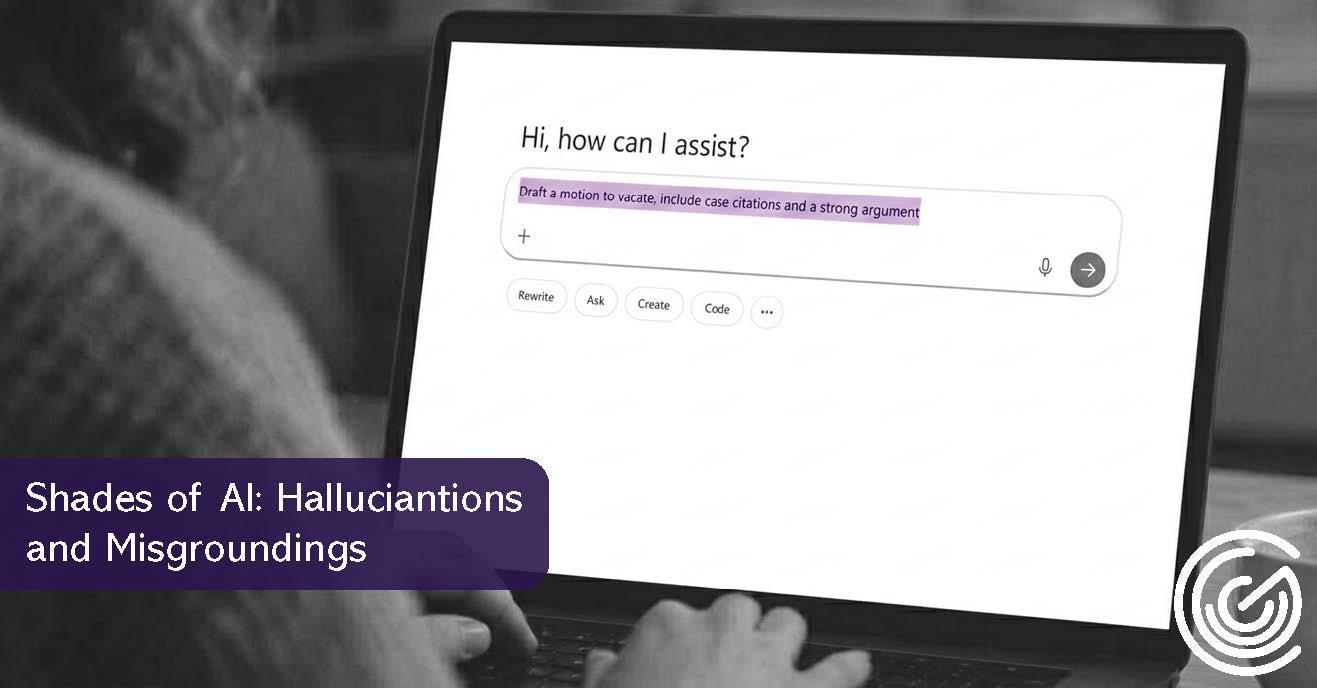
As the use of AI in litigation explodes, so do the consequences for those who misuse it.
What began as isolated incidents involving fake citations has now evolved into something much broader — fabricated quotations, hallucinated case law, mischaracterized authority, and AI-generated memoranda submitted to courts with little or no verification.
Courts are no longer treating these incidents as innocent technological mistakes. They are increasingly treating them as sanctionable conduct.
In our prior blog, Appellate Div Deems Fake AI Cites Frivolous, we discussed the Appellate Division’s determination that the use of fabricated AI-generated citations constitutes frivolous conduct. Since then, several additional New York decisions have reinforced this point, delivering a clear and unmistakable message: attorneys and litigants who rely on AI without proper verification do so at their own risk.
In Keefe v. BMakin Film LTD, a pro se defendant moved to vacate a default and restore his underlying motion to dismiss. The Court found that his submissions were riddled with AI-generated arguments, incorrect citations, phantom cases, and fabricated quotations.
The Court did not mince words:
“Submissions that rely on non-existent cases generated by artificial intelligence, resulting in AI ‘hallucinations’ and cases that do not stand for the propositions alleged, are considered ‘frivolous conduct’ under 22 NYCRR § 130-1.1 and are sanctionable.”
Importantly, the Court rejected the argument that pro se status somehow excused the conduct.
The decision is significant for another reason as well. The Court directly addressed the growing burden AI abuse is placing on the judiciary itself. The Court noted that the litigant could simply have submitted an affidavit setting forth his arguments instead of filing memoranda of law containing fictitious authority and fabricated quotations.
That observation matters.
Judges are increasingly recognizing that AI-generated hallucinations do not merely create “mistakes.” They consume limited judicial resources, force opposing counsel to waste time disproving fake authority, and undermine the integrity of the litigation process itself. The Court ultimately warned that future violations would result in monetary sanctions and refused to consider the motion papers because they relied upon fictitious authority.
Another notable decision is Michaelis v Wilmington Sav. Fund Socy., FSB, where the Court discussed disclosure obligations relating to the use of AI in legal submissions. There, the Court confronted not only hallucinations, but also “misgroundings” — instances where AI tied legal propositions to authority that did not actually support them.
That distinction is critical.
The danger is no longer limited to entirely fake cases. AI can also distort real authority in subtle ways that may not be immediately obvious unless the underlying decisions are actually reviewed and analyzed.
Perhaps the most striking decision is Abello v NYP Holdings, Inc. In that case, a pro se litigant submitted a memorandum of law filled with AI-generated hallucinations and misgroundings. After being caught, the litigant sought leave to submit a corrected memorandum. The Court’s response was essentially that the Court does not have the time to do this twice.
That may ultimately become the defining judicial attitude toward AI abuse.
Courts are making clear that they will not permit litigants to outsource legal analysis to generative AI and then shift the burden of verification onto judges and opposing counsel.
And this issue is not confined to pro se litigants.
Attorneys who rely on AI without independently verifying citations, quotations, holdings, and propositions of law are exposing themselves — and their clients — to sanctions, reputational damage, adverse rulings, and potentially malpractice exposure.
None of this means AI has no place in legal practice. Quite the opposite. AI can be extraordinarily useful for research assistance, organization, drafting, and issue spotting.
But AI is not a lawyer.
It is not a citator.
It is not a substitute for legal judgment.
Every case still must be read.
Every citation still must be checked.
Every quote still must be verified.
Every proposition of law still must be grounded in actual authority.
The technology may be new.
The duty of candor to the tribunal is not.
If you have questions about the use of AI in litigation, or would like to discuss how these developments may impact your practice, our team is here to help. We are closely monitoring the evolving case law and can provide practical guidance on navigating the risks while leveraging AI effectively and responsibly. Please feel free to contact us to continue the conversation.
Tags: